
250–450
hours
Transcribing a portfolio of 850 KYC forms by hand. One analyst, two or three months, copying ID numbers.
A team of AI agents that reads the KYC, verifies every person in the file and delivers two reports from the same data: one for Compliance and one for the commercial team. The decision still belongs to a person.
With your team, not on a stage. We will write within 48 hours to schedule the session.
For the commercial team the process has no visibility: the client has signed, the capital is ready, and no one can say when approval will come or where the file stopped. On the other side the uncertainty is the same: the compliance officer does not know whether the form was read in full or whether every related person was verified.

Transcribing a portfolio of 850 KYC forms by hand. One analyst, two or three months, copying ID numbers.

In a single implementation, over one block — the consent — that was missing from the load. Not over risk. Over a field.
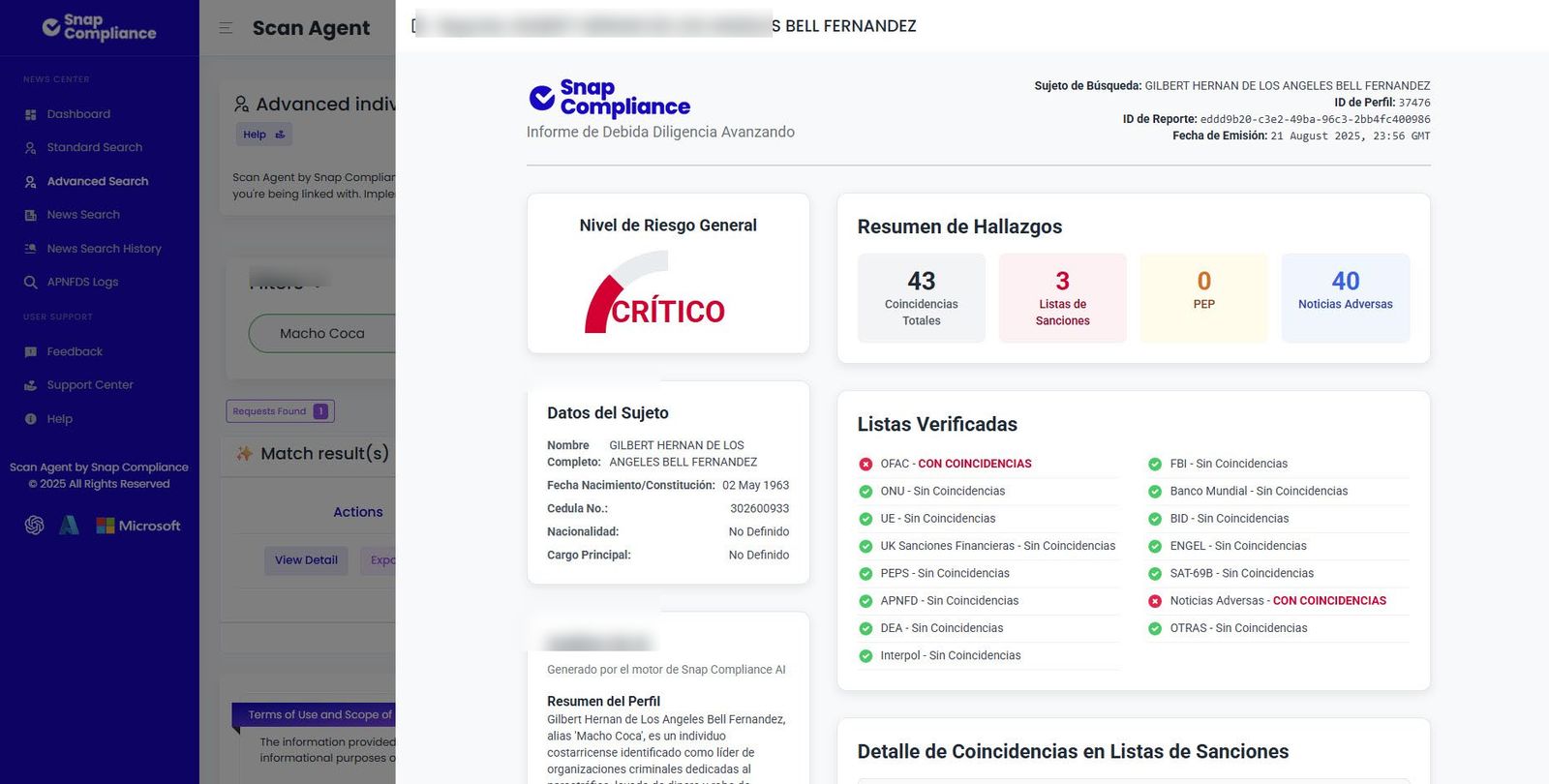
What the engine already does in production, at low cost. The question is who reads the form and who decides.
That is the gap we close.

Calls each member, waits and retries, watches the timings, routes errors and records every step in the log.
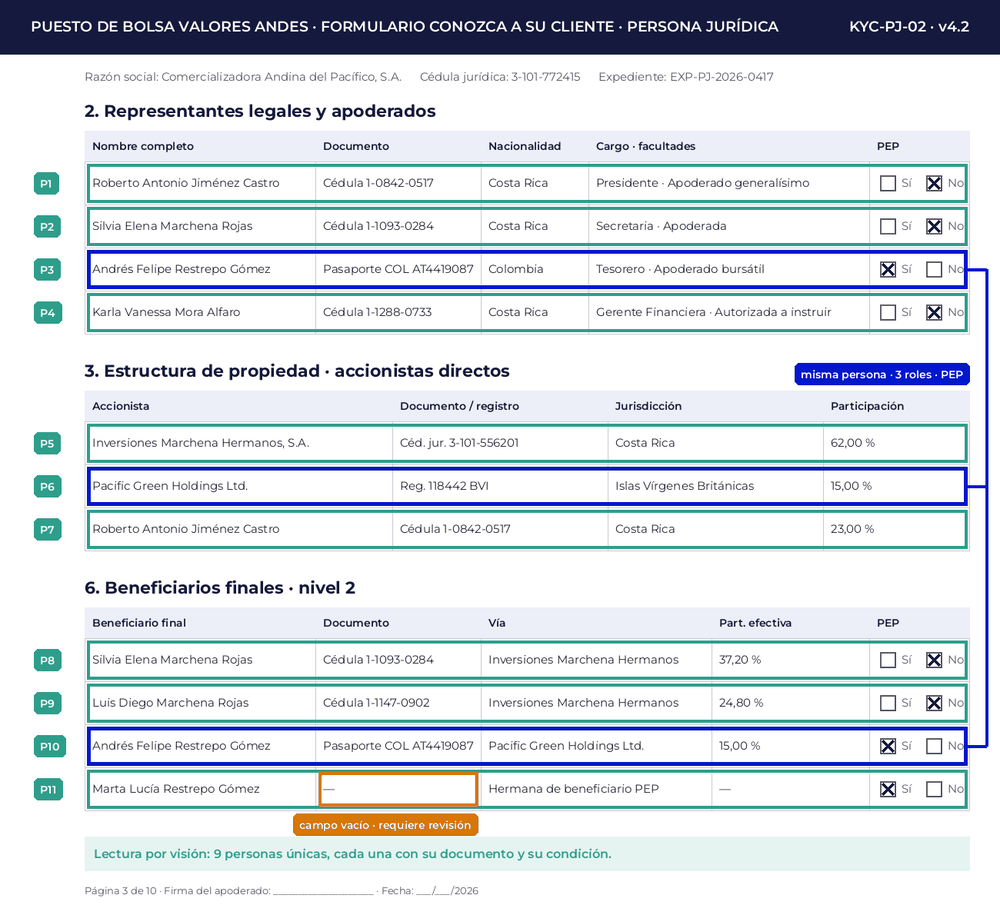
Reads any KYC form with no prior template. It extracts the full graph of people — representatives, shareholders, ultimate beneficial owners — and flags what it could not read instead of inventing it.
Turns each person's checks into a single verdict for the file and drafts the reports. The file inherits the most severe signal; it never averages downward.
Anthropic models on Amazon Bedrock AgentCore. The agents never write to the master record.
No agent closes an alert. No agent onboards a client. The only step that writes to the master record is executed by a compliance officer, by name.
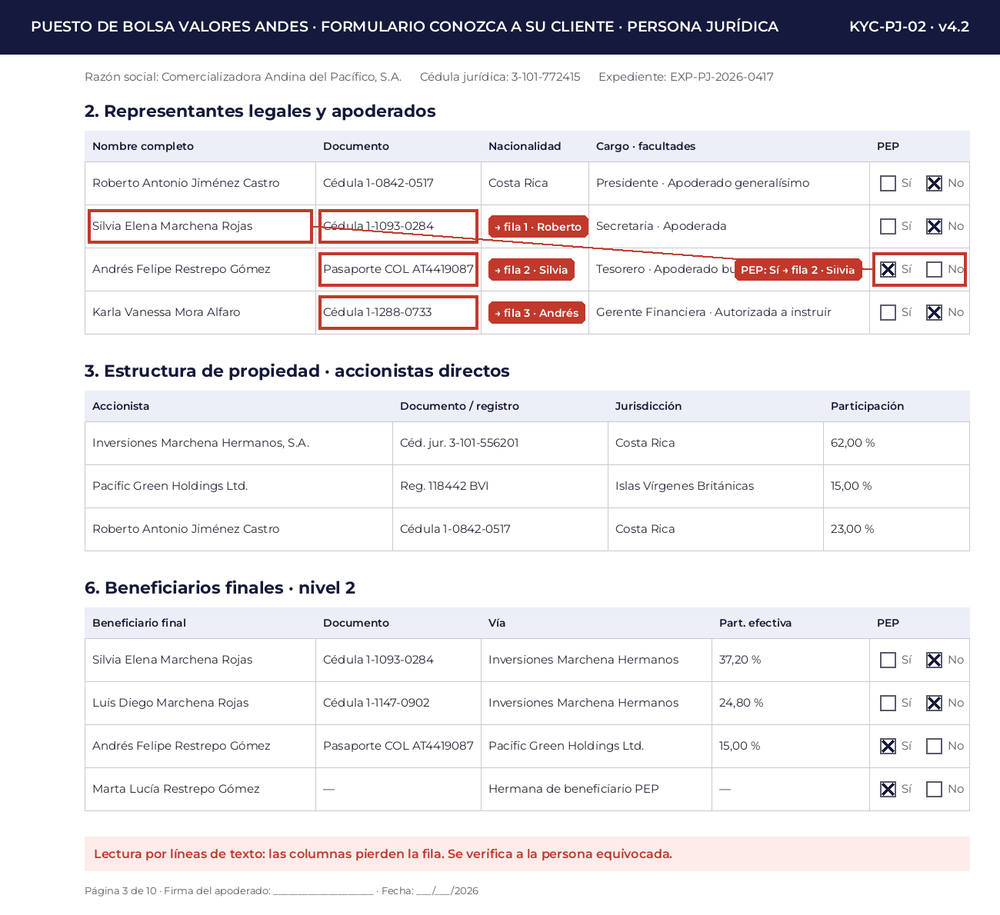
Comercializadora Andina del Pacífico, S.A. A Costa Rican brokerage firm, KYC-PJ-02 v4.2 form, nine related persons, two of them PEPs. Fictitious data for illustrative purposes.
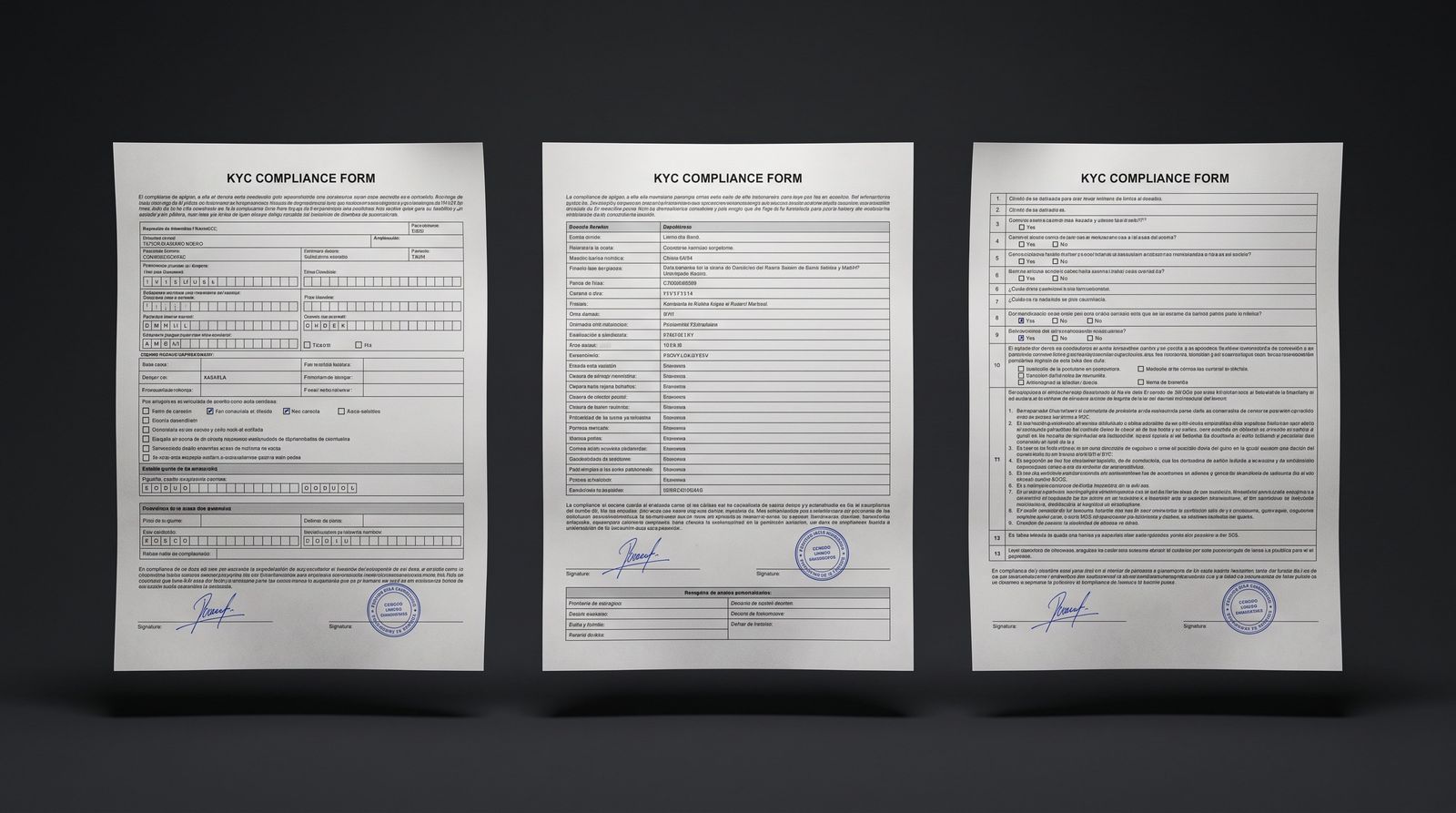
No template, no field mapping. Nobody told it where the ID number is.
With line-by-line text reading, ID numbers land one row down and the PEP flag lands on the wrong person. In a KYC that is not a formatting error: it is a verification failure.
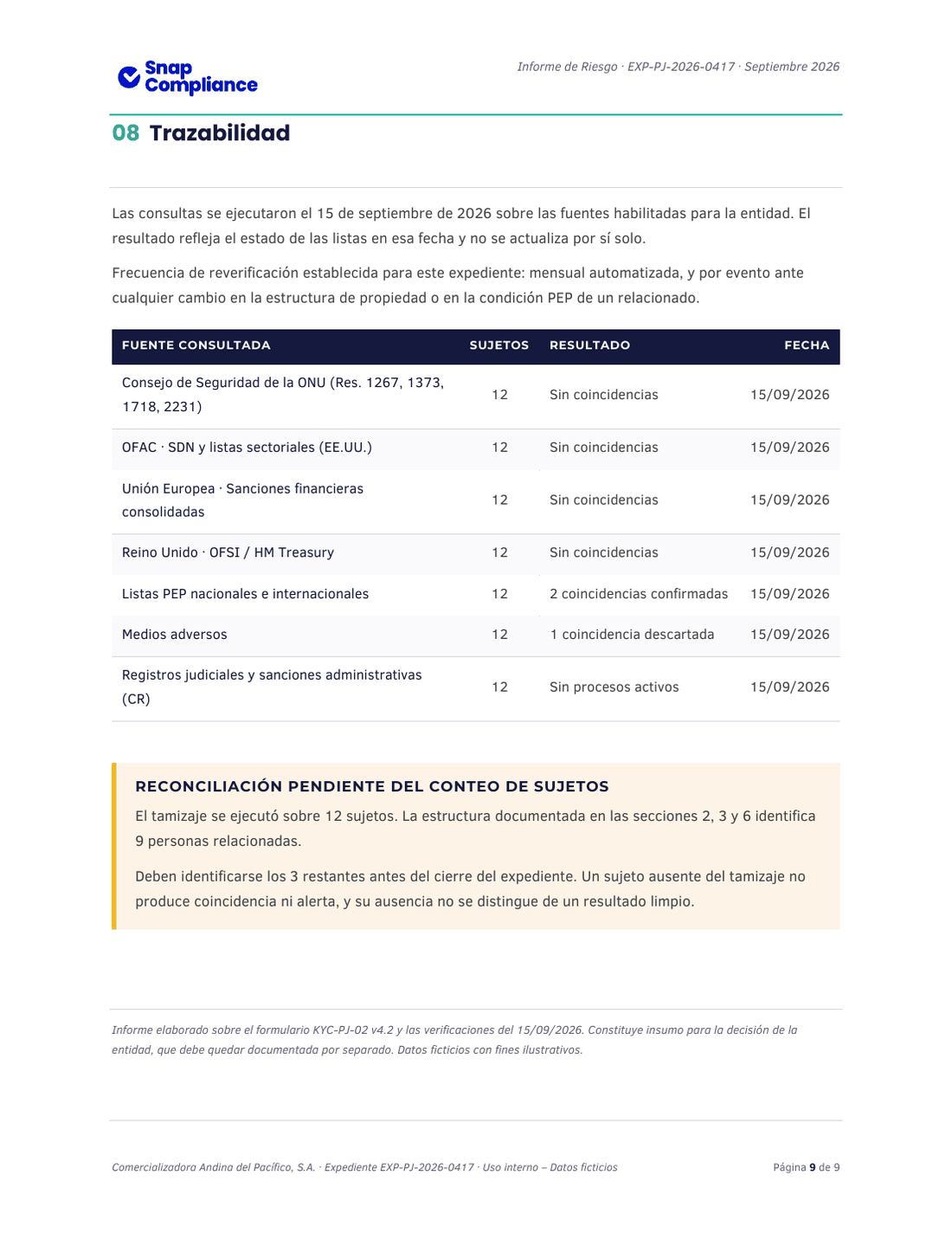
UN, OFAC, European Union, United Kingdom, PEP lists, adverse media, court records and commercial signals in the press. What did not match is recorded too: before the regulator it counts just the same.
A sitting deputy minister holding 15 % through a BVI vehicle, and his sister a member of congress. Verdict: ESCALATE, high risk, committee approval before onboarding (FATF R.12). Plus two discrepancies in the form itself, reported, not corrected.
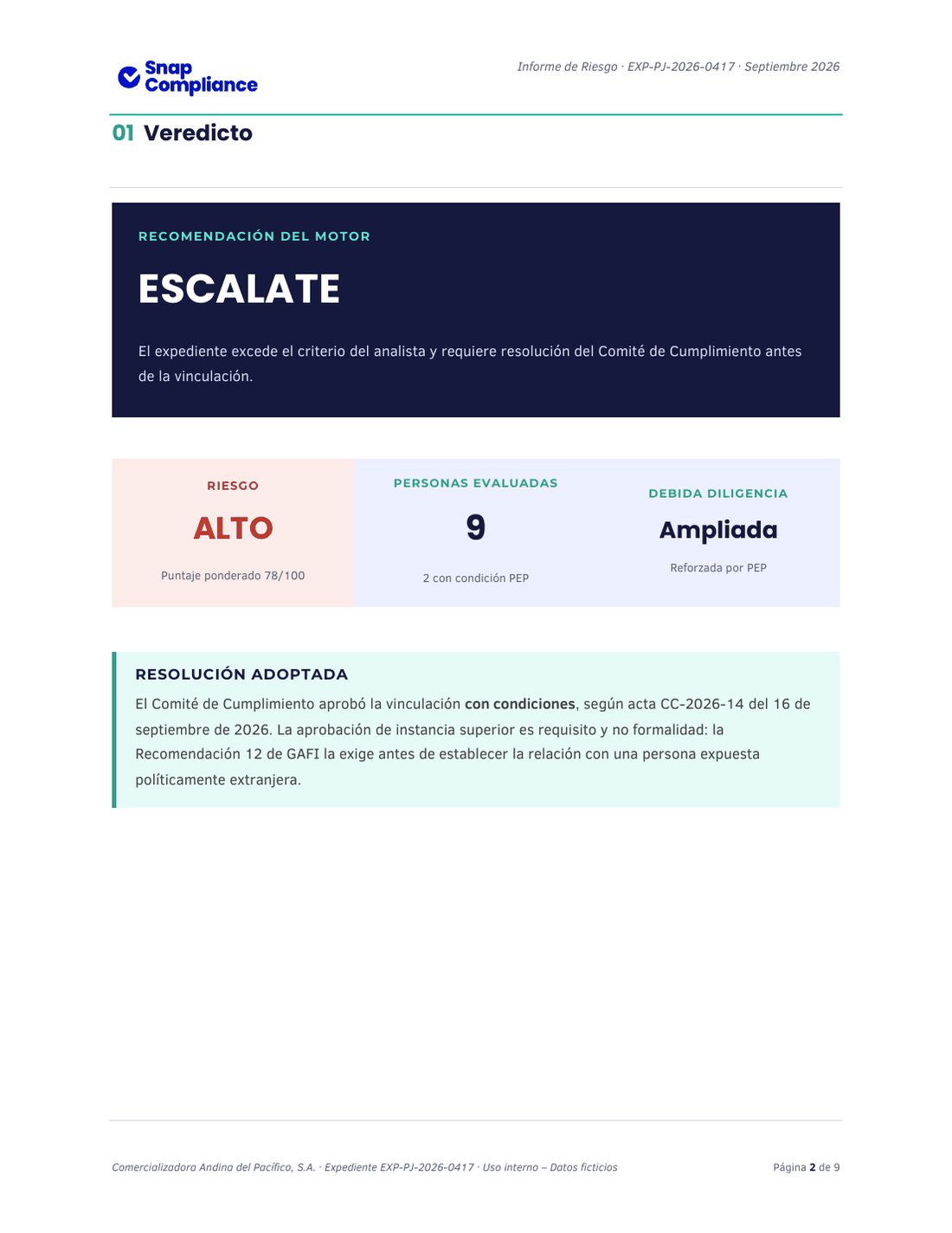
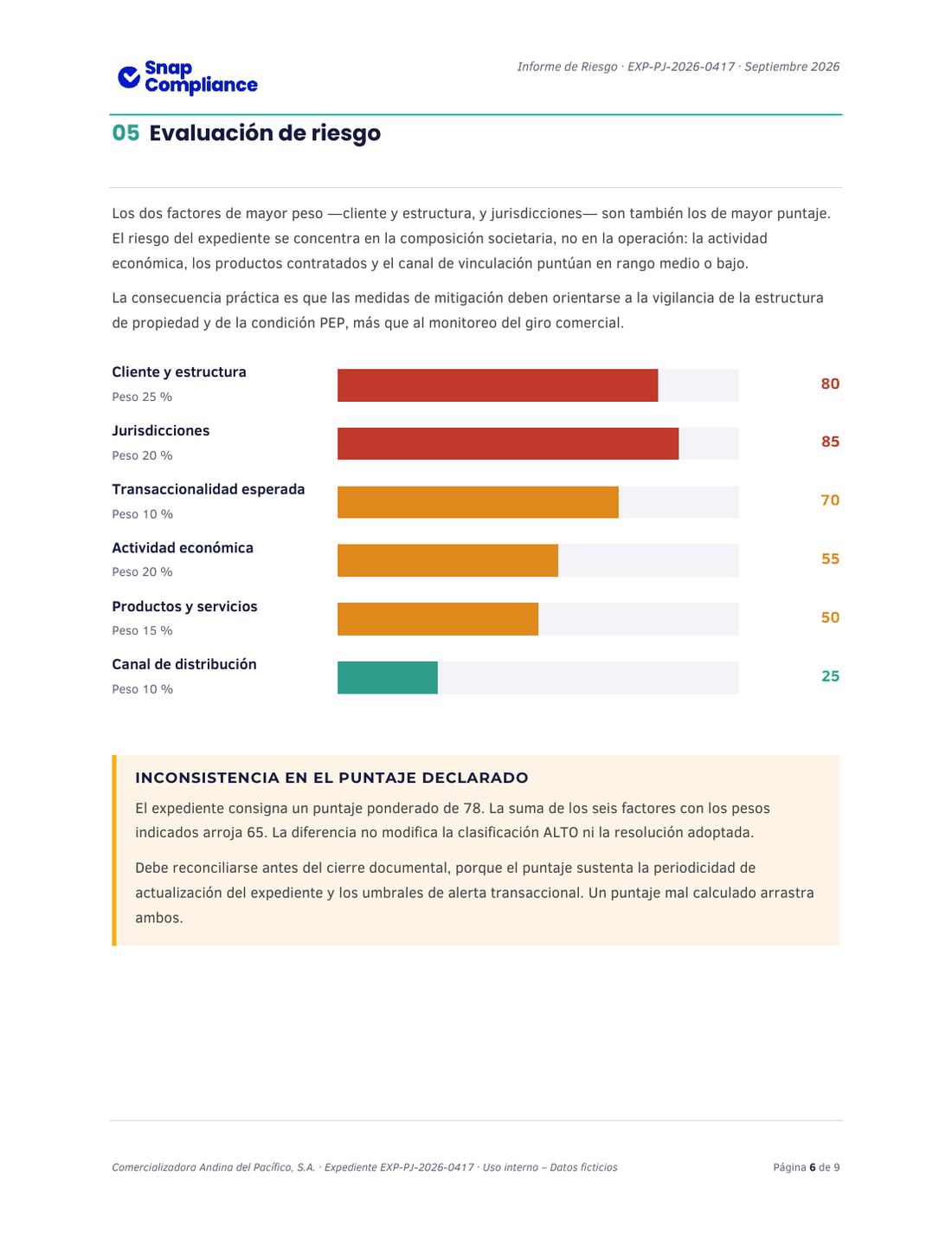
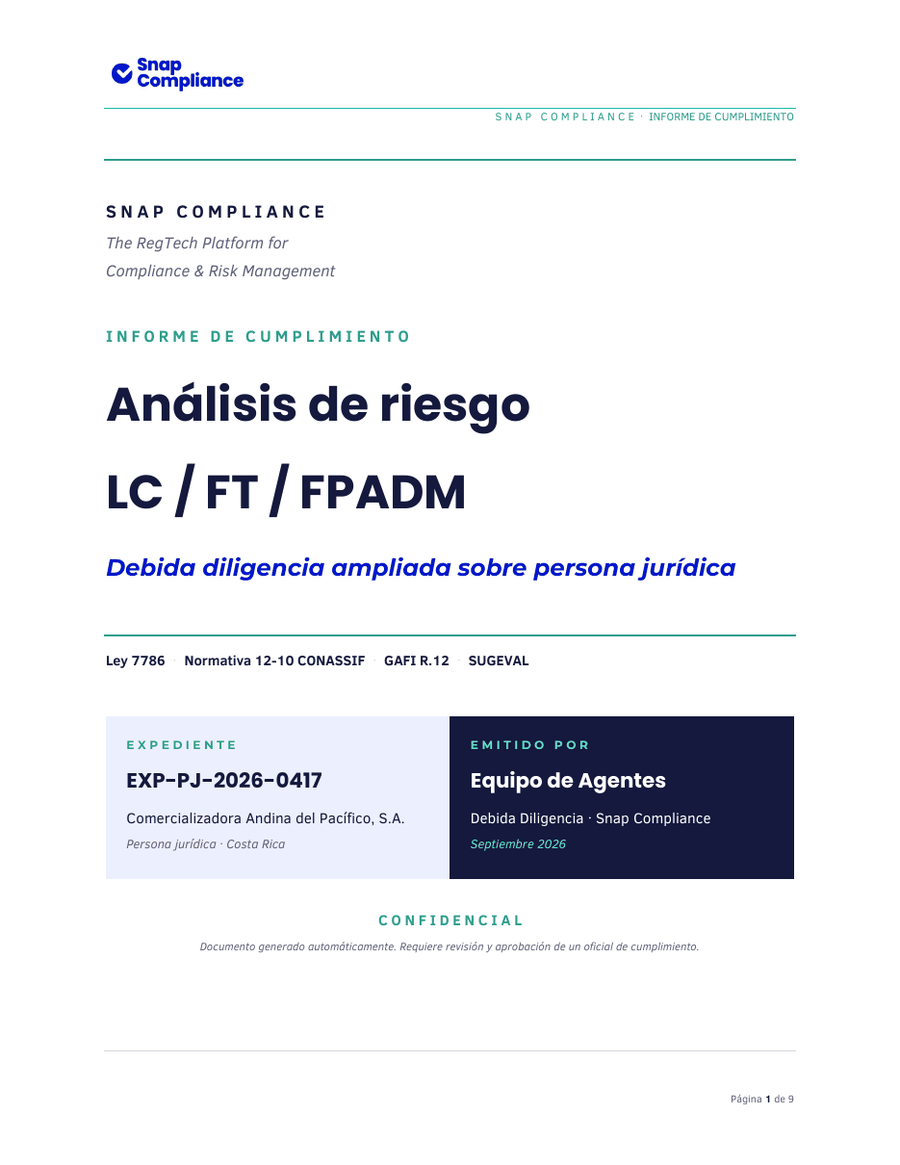
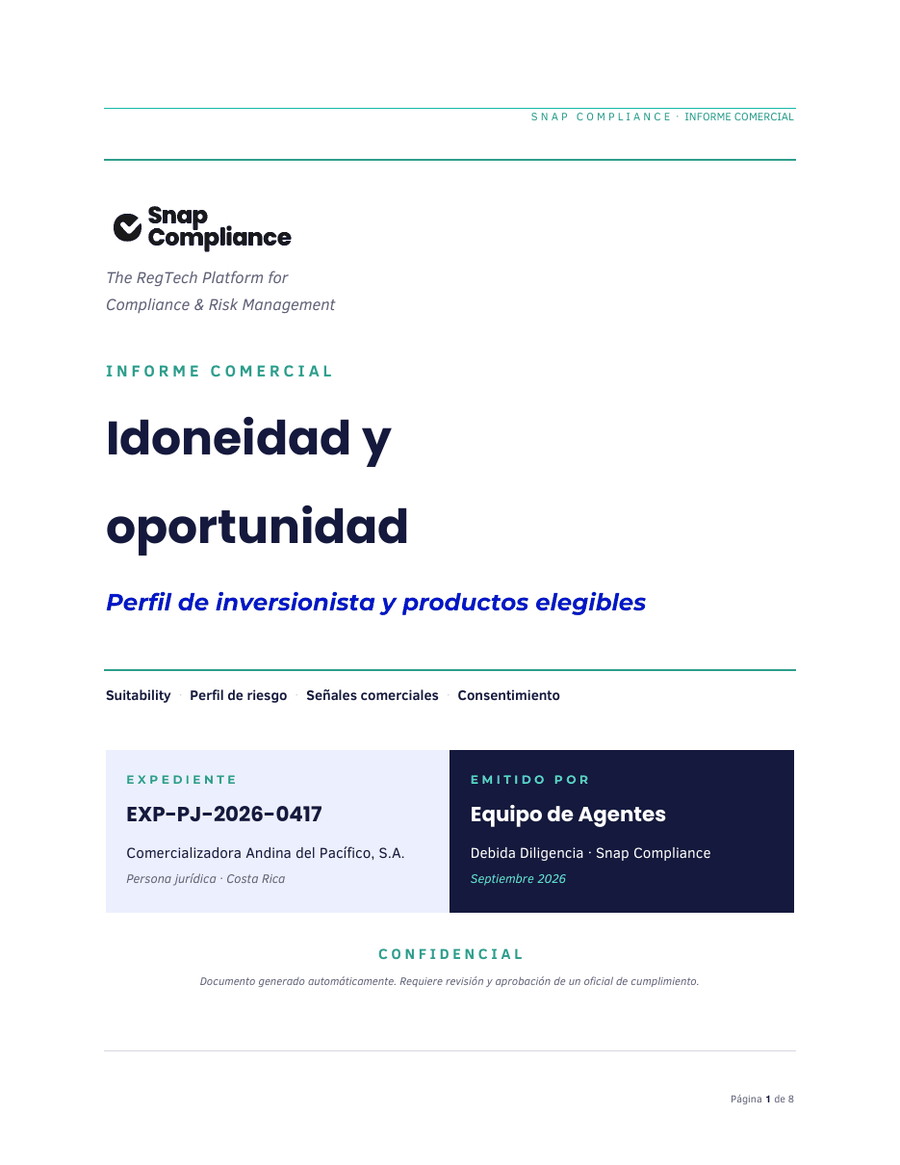
Version A with commercial consent: a risk report and a suitability and opportunity report. Version B without consent: the risk report only. The commercial report exists solely if the risk report came back clean and the client consented. That order is the thesis.
Both reports belong to the sample file: fictitious people and data, for illustrative purposes.
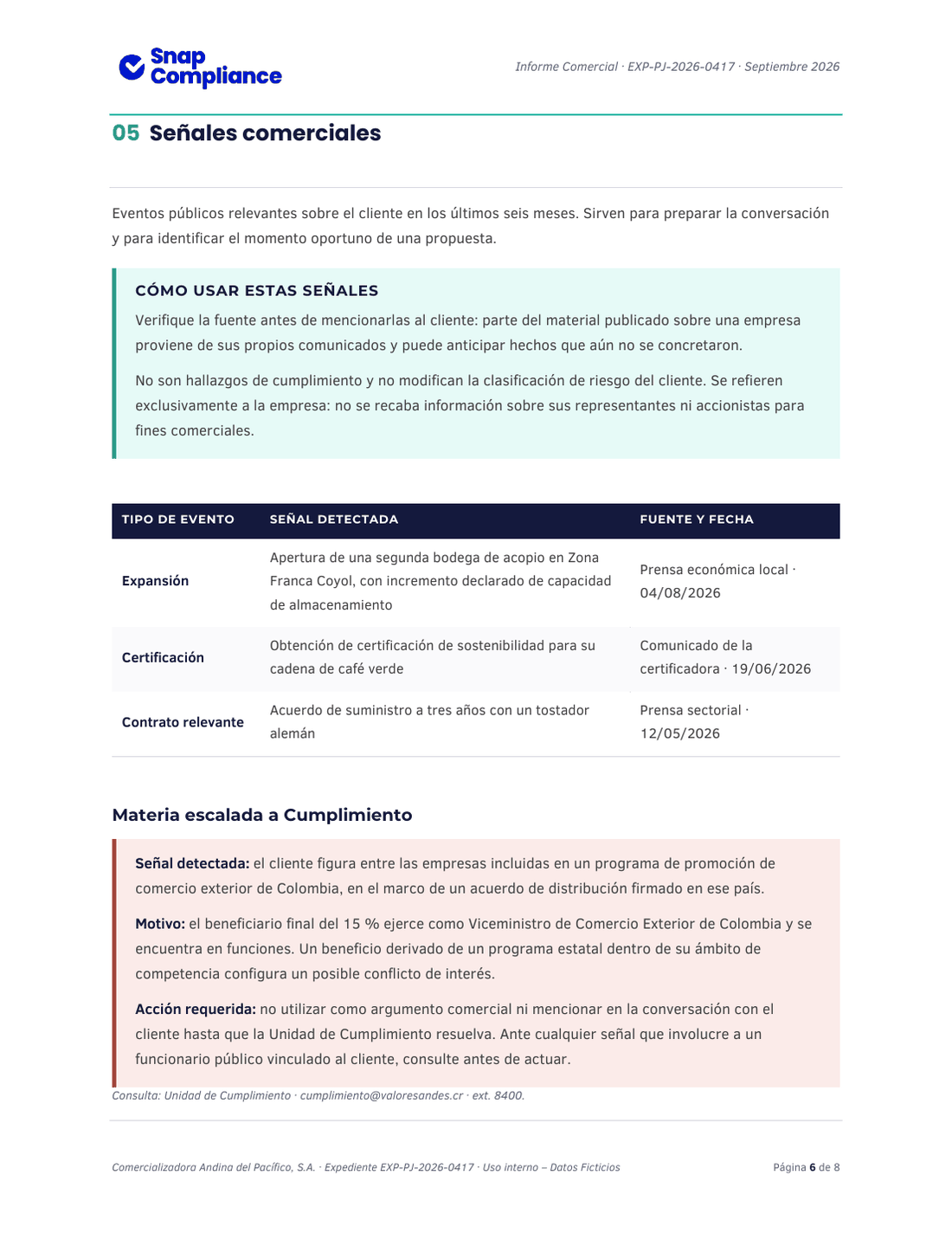
Three positive signals in the press help prepare the commercial conversation. A fourth — a Colombian state programme touching the deputy minister — was escalated as a possible conflict of interest and is not used as a commercial argument until the unit rules on it.
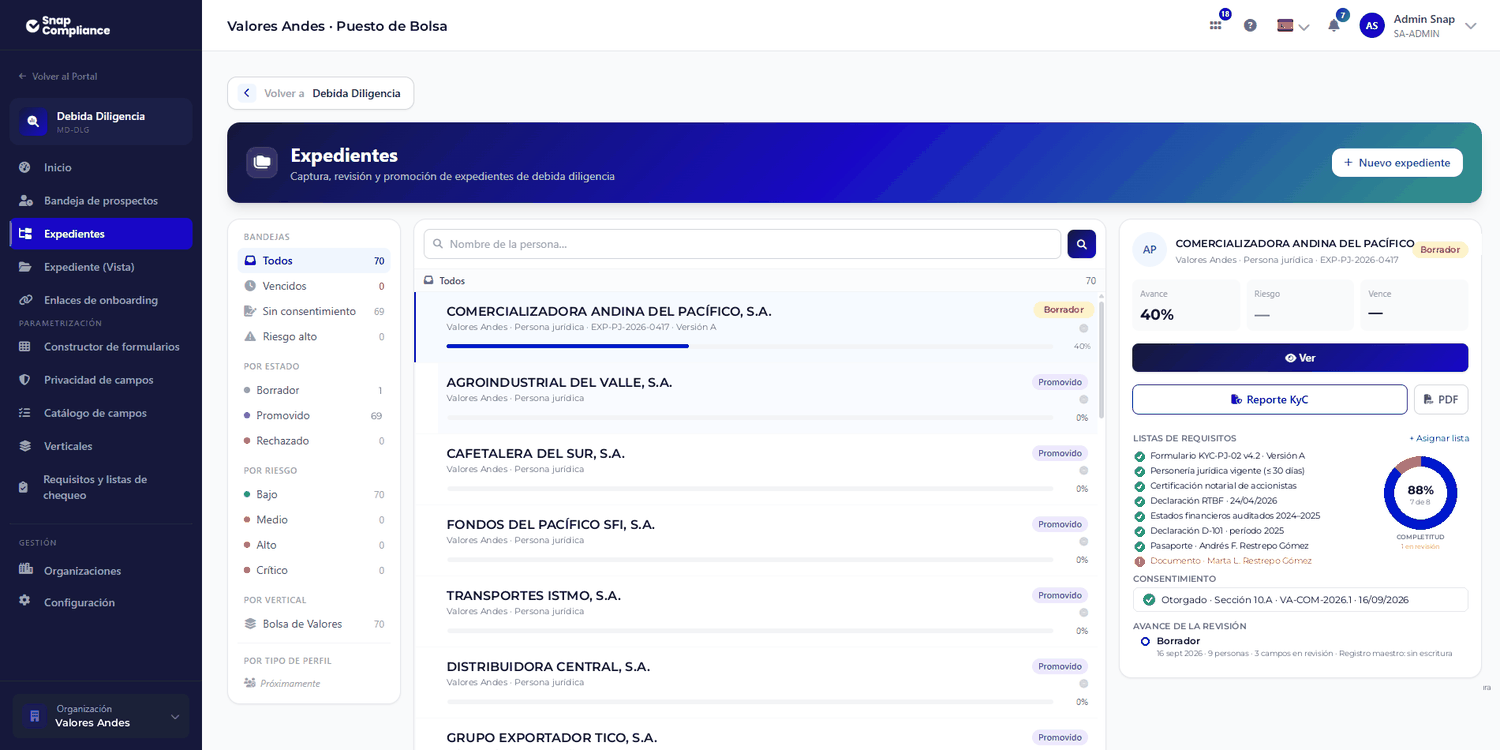
The commercial team can already see that their client is in, what state the file is in and what is missing. Nothing has been written to the master record yet.
The same team. What changes is what they read.
Five systems already in operation, each with its own users, inside the Snap Compliance Compliance OS.
We run it on your own KYC form, using a test file and under a data protection agreement.
Go to the formLucia
Virtual assistant · Snap Compliance
Before we start
I'm Lucia. I'll be assisting you here and helping you with whatever you need from Snap Compliance.
We process your data in accordance with the applicable laws and regulations.